
When homeowners ask me, “How long does a deck last?” my honest answer is: it depends. After decades in the decking industry, I’ve seen decks fail in less than 15 years and others last for decades. Understanding what separates those outcomes can help you get the most life from your deck.
What Factors Affect How Long a Deck Lasts?
Deck longevity isn’t usually determined by a single factor. Instead, several elements work together to influence how long a deck lasts. Material choice, climate and weather exposure, build quality, and maintenance habits all play a role.
Material Choice
The materials used throughout the deck can affect how long it lasts. Decking materials such as pressure-treated lumber, cedar, hardwood, composite, and PVC all handle moisture, insects, UV exposure, and wear differently.
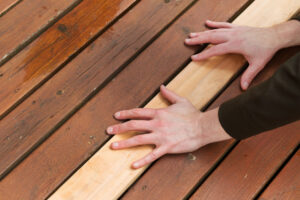
The materials used beneath the surface, including framing lumber, fasteners, connectors, and flashing, can have just as much influence on a deck’s lifespan. Choosing quality materials suited to the deck’s environment can help reduce corrosion, moisture damage, and premature deterioration.
Climate and Weather Exposure
Climate can shorten or extend the life of any deck. A deck exposed to heavy rain, humidity, snow, freeze-thaw cycles, salt air, or intense sun will face more stress than one in a milder environment. Moisture is one of the biggest threats to the wood deck components with repeated exposure contributing to rot, decay, and structural weakening.
Build Quality
Poor installation shortens any deck’s life, regardless of material quality. Premium deck boards can’t save a poorly built substructure, and top-of-the-line railings can’t make up for wobbly corner posts. Proper framing, flashing, drainage, fasteners, spacing, and structural details all matter. Avoiding the most common deck construction errors helps reduce the risk of premature wear, moisture problems, and safety concerns.
Maintenance Habits
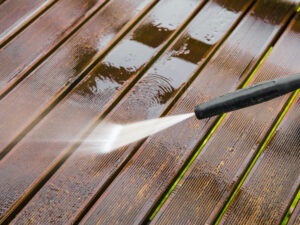
Maintenance is the factor homeowners have the most control over after the deck is built. I can attest: regular cleaning, seasonal inspections, and timely repairs can add years to a deck’s life. Skipping maintenance, especially on wood decks, can speed up rot, cracking, corrosion, and surface breakdown.
How Long Does Each Decking Material Last?
Decking lifespans vary by product quality, installation, climate, and care, but these ranges offer a realistic starting point.
Pressure-Treated Wood: 10–20 Years
Pressure-treated lumber remains popular because it is affordable and widely available. With regular cleaning, sealing, and repairs, it can last 10 to 20 years, though neglected wood may fail sooner.
Cedar and Redwood: 15–30 Years
Cedar and redwood contain natural oils that help resist insects and moisture. With routine maintenance and good drainage, these wood decks often last 15 to 30 years.
Hardwood and Ipe: 20–50+ Years
Dense hardwoods such as Ipe, Cumaru, Garapa, and teak are among the longest-lasting natural decking materials. With proper installation and maintenance, hardwood decking can last 20 to 50 years or more.
Composite Decking: 25–50 Years
Composite decking has improved significantly over the years. Basic or older composite products may fall closer to the 25- to 30-year range, while premium capped composite lines may carry warranties of up to 50 years.
PVC Decking: 50+ Years
PVC decking contains no wood fibers, making it highly resistant to moisture, rot, mold, mildew, and insects. High-quality PVC decking can last 50 years or longer with routine cleaning and proper installation.
How Do the Main Decking Materials Compare?
The easiest way to compare decking materials is to look at lifespan, maintenance, durability, and upfront cost together.
| Material | Typical Lifespan | Maintenance | Durability | Initial Cost |
| Pressure-treated wood | 10–20 years | High | Moderate | Low |
| Cedar/redwood | 15–30 years | Moderate to high | Good | Moderate |
| Hardwood/Ipe | 20–50+ years | Moderate | Excellent | High |
| Composite decking | 25–50 years | Low | Excellent | Mid to high |
| PVC decking | 50+ years | Low | Excellent | High |
Different materials also vary in how they respond to moisture, sunlight, temperature changes, insects, and everyday wear. Those differences can have a significant impact on how well decking performs.
If you’re weighing the pros and cons of different decking materials, our guide to PVC vs Composite vs Wood Decking breaks down the key considerations.
What Are the True Costs, Including the Hidden Ones?
The least expensive decking material upfront isn’t always the least expensive over the life of the deck. When comparing options, it’s important to consider both the purchase price and the ongoing costs of maintenance, repairs, and replacement.
Wood decking often has a lower purchase price, but those savings can be offset by recurring expenses such as sealing, staining, cleaning products, board replacement, and, in some regions, pest-related treatments. Over the years, those costs can add up.
Composite and PVC decking typically require a larger initial investment, but they generally have lower lifetime maintenance costs. Routine cleaning is still recommended, but homeowners can avoid many of the recurring expenses associated with maintaining a natural wood deck.
How Long Does the Substructure Last?
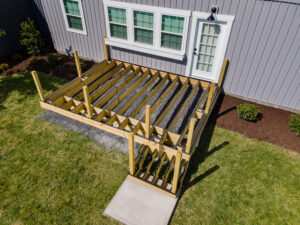 A well-built, properly protected substructure should last at least as long as the decking installed above it. If the framing deteriorates prematurely, even a deck with decades of life left in its surface boards will require major repairs or rebuilding.
Joists, beams, posts, blocking, hardware, and the ledger board all contribute to the deck’s long-term performance and face the same environmental stresses as the deck surface. Pressure-treated framing lumber is designed to resist decay, but it is not waterproof. Over time, trapped moisture can lead to rot, splitting, corrosion, and structural weakness.
Ledger protection is one of the most important details in an attached deck because the ledger board serves as the primary connection between the deck and the house. Trapped water can contribute to decay in both the ledger and the home. Proper flashing tape helps protect this critical connection. Trex Seal Ledger and Sub-Ledger Tape create a waterproof barrier to keep water out.
Protecting the tops of joists and beams with Trex Protect butyl tape can also extend framing life by helping keep water out of the frame’s joists, beams, and rim. Over the years, protecting the framing from moisture can help extend the life of the deck structure and reduce the risk of costly repairs.
What Are the Signs a Deck Needs Replacement?
A deck may need replacement when structural problems go beyond surface wear. Some issues can be repaired, but others point to deeper deterioration.
Look for: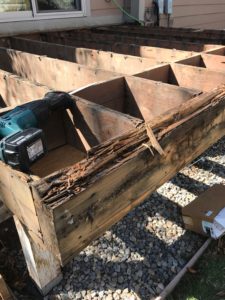
- Soft or spongy deck boards
- Visible rot or crumbling wood
- Wobbly railings or loose posts
- Rusted, missing, or corroded hardware
- Sagging sections
- Persistent mold or mildew
- Cracked joists or beams
- Ledger board movement or separation from the house
While a few damaged boards may be easily replaced, have the deck inspected if you notice structural movement, soft framing, or a loose ledger.
How Do You Make a Deck Last Longer
The best way to extend deck lifespan is to manage moisture, maintain the surface, and inspect the structure regularly.
Start by keeping the deck clean. Leaves, dirt, pollen, and debris hold moisture against the surface and can clog gaps between boards. Clean the deck at least twice a year, especially before and after heavy-use seasons.
For wood decks, reseal or restain as recommended for the species and your climate. In wet or high-sun regions, that maintenance may need to happen more frequently.
Inspect fasteners and hardware annually. Tighten loose connections, replace corroded hardware, and check stairs and railings carefully. These are high-use areas where small problems can become safety concerns.
Most importantly, protect vulnerable framing before problems begin. Ledger flashing, joist tape, proper board spacing, drainage, and airflow all help reduce moisture buildup.
What Does Proper Deck Maintenance Actually Look Like?

A good deck maintenance routine does not need to be complicated, but it should be consistent.
At least once a year, preferably in spring after the stresses of winter weather, walk the deck and check:
- Deck boards for cracks, soft spots, cupping, or rot
- Gaps between boards for trapped debris
- Railings and stair connections for movement
- Fasteners for rust, looseness, or popping
- Joists and beams for dark staining, softness, or cracking
- The ledger area for signs of water damage or separation
- Drainage around the deck and foundation
Additionally, wood decks may need cleaning, sanding, sealing, or staining depending on condition. And composite and PVC decks still need regular cleaning; low maintenance does not mean no maintenance.
FAQ About Deck Lifespan
How long does a pressure-treated deck last?
A pressure-treated wood deck typically lasts 10 to 20 years, depending on climate, maintenance, drainage, and build quality. Regular sealing, cleaning, and inspections help push the lifespan toward the higher end of that range.
Does composite decking last longer than wood?
Yes, quality composite decking generally lasts longer than pressure-treated wood and requires less maintenance. Depending on the product line, composite decking can last 25 to 50 years.
What part of a deck fails first?
The substructure often fails before the deck surface, especially unprotected ledger boards and joists, as well as fasteners and connectors. Moisture is usually the main cause because it can collect in hidden areas and weaken wood from the inside out.
Can I extend the life of an old deck?
Sometimes. Cleaning, replacing damaged boards, improving drainage, tightening hardware, and protecting exposed areas can help an aging deck last longer. However, if the frame or ledger is already compromised, replacement may be the safer option.
Conclusion
So, how long does a deck last? The answer depends on the materials you choose, the quality of the construction, the conditions the deck faces, and how well it’s maintained over time. In my experience, the longest-lasting decks combine durable materials with proper moisture protection from the start, including attention to critical areas like the ledger, joists, and other structural components. When all of those elements work together, a deck can last for decades.
Sources
American Wood Council. (2014). Prescriptive residential wood deck construction guide.
International Code Council. (2024). Ledger flashing.
North American Deck and Railing Association. (2023). Check Your Deck® checklist.
Trex. Trex warranties.
Trex. Trex composite decking and railing FAQs.