
 Over the years, I’ve seen plenty of decks that looked fine at a glance but failed inspection—or worse, failed under routine use—because basic building codes were ignored. These rules aren’t meant to slow you down or complicate your project. They’re in place to ensure your new deck is built to be safe, stable, and dependable.
Here, I’ll cover the main areas of deck codes, address, explain why they matter, and show how they help prevent costly mistakes.
What Are Deck Building Codes?
Building codes set the minimum standards for safety and durability in construction. For decks, that means everything from footing depth to joist spacing to the types of fasteners you can use. Your local building department enforces these codes by sending inspectors to verify that your work meets the standards. I guarantee it’s well worth the time and effort to follow code requirements: you’ll avoid fines, pass inspections, and end up with a deck that’s stable, safe, and ready for years of use.
Why Deck Building Codes Matter
The most obvious reason is safety. A deck is a load-bearing structure that needs to support people, furniture, and sometimes really heavy items, such as hot tubs. Codes make sure your deck can handle that weight without sagging or collapsing. They also help avoid other issues such as water damage, loose railings, or openings wide enough for a child to slip through.
From a legal standpoint, an unpermitted deck can lower your home value, create problems when selling, or void your insurance if there’s an accident.
From ledger boards pulling away from the house to uneven stairs and sinking footings, I’ve seen a wide range of preventable, costly and dangerous problems. By adhering to code, you’re building a deck that family and friends can enjoy without worry.
Key Components of Deck Building Codes Requirements
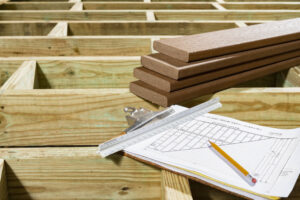 National residential codes outline the primary requirements for a safe and durable deck. The following areas are commonly covered; however, local codes can vary and may impose stricter rules, so be sure to check them before starting your project.
Permits and Inspections
Anytime a deck is attached to your house or is more than about 30 inches above grade, a permit is usually required. Obtaining one isn’t just a matter of paperwork: it means an inspector will verify that your deck is constructed with proper materials and techniques, ensuring it is safe and meets code.
Before you file for a deck permit, confirm the zoning rules for your property. Verify setbacks, lot coverage, and any HOA rules early to avoid potential issues. Local planning staff can confirm these, so you can design a deck that meets property requirements from the start.
How to apply for a deck permit:
- Prepare plans. Provide a simple site plan with dimensions and setbacks, plus framing plans that show joist and beam sizes, spacing, spans, post locations, and footing sizes and depths. For an attached deck, include a ledger connection and water-protection detail showing how you’ll prevent moisture from reaching the ledger—such as using watertight Trex Seal tape.
- Attach product information. Add manufacturer installation instructions for any manufactured decking, connectors, or specialty hardware you plan to use.
- Submit the application and fees. Your building department will do a plan review and may mark minor corrections on your plans before issuing the permit. Fees, which typically cover the cost of required inspections, vary and are often based on the deck’s size, height, or overall value.
If your deck requires a permit, inspections are part of the process. Local rules determine how many: some require only a final inspection, while others necessitate separate checks at critical stages. When multiple inspections are required, they typically include:
- Footing inspection – before placing concrete, to verify depth, width, and soil bearing
- Framing inspection – before installing decking boards, check the joists, beams, ledger, connectors, and fasteners
- Final inspection – after everything is complete, to verify railings, stairs, and finish details meet code
- Trade inspections – required when adding electrical, gas, or other specialty work
Inspections catch problems while you can still fix them. Trust me, calling for each inspection on time protects your schedule, your budget, and your peace of mind.
Footings and Foundations
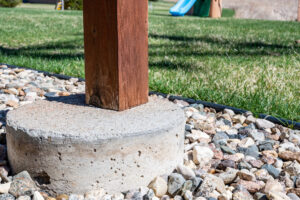 Footings must withstand freeze–thaw cycles, shifting soil, and the constant weight of the deck above. Code-compliant footings and foundations provide your deck with the solid base it needs to remain level, secure, and safe throughout years of use and seasonal changes.
Code generally calls for footings to meet these requirements:
Depth: Below frost line (varies by location)
- Check your depth requirements with my deck footing depth and frost line guide.
- Diameter: Sized according to beam/post load
- Material: Poured concrete or precast footings rated for structural use
Structural Support
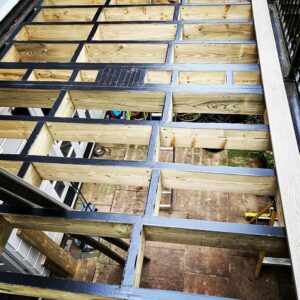 Structural support includes the joists, beams, ledger board, and connectors that form the load-bearing skeleton of your deck. Your deck’s frame has to carry every pound from people, furniture, and even seasonal snow loads — which is why codes match joist and beam sizes to the span and load, preventing bounce, sag, and long-term structural strain. The ledger board, which connects the deck to your home, is another critical component and one of the most common failure points. Codes require specific fasteners, such as lag screws or through-bolts, along with effective water protection to keep rot from setting in.
I’ve seen ledgers rot almost completely through because the builder skipped flashing. That’s why Trex Seal Ledger and Sub-Ledger Tape are so valuable. They’re superior alternatives to traditional ledger flashing, providing not only water resistance but also waterproof protection. They self-seal around fasteners, integrate with house wrap for a continuous moisture barrier, and the flexible aluminum liner makes installation easy.
Structural support codes generally call for:
- Joist size and spacing per span tables
- Beam sizing per load and span charts
- Ledger boards bolted (not nailed) and protected against water intrusion
- For step-by-step connection details, see my post on attaching a ledger board.
- Hangers and connectors rated for exterior use
Decking Materials
 Deck boards face everything from blazing sun and pounding rain to years of foot traffic and furniture scrapes. Codes set a baseline for what’s acceptable, but choosing higher-performing materials can mean the difference between early deterioration and extending the lifespan of a deck for decades to come.
Common code standards for decking materials include:
- Lumber grade that meets strength and span requirements for the intended use, often No. 2 grade or better for joists, beams, and decking boards
- Manufactured decking approved or listed for exterior use and installed according to the manufacturer’s instructions
- Wood with natural decay resistance or preservative-treated if exposed to the weather
- Fasteners that are hot-dip galvanized or stainless steel for use with preservative-treated wood
Railings and Guardrails
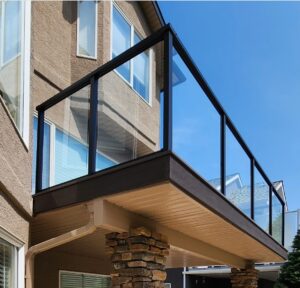 Railings are more than decorative—they’re a critical safety system designed to prevent falls. Building codes set standards so they can stand up to real-world use, from rambunctious kids to adults relying on them for support.
In most areas, railing and guardrail codes call for:
- Minimum height: 36″ (42″ in some areas)
- Baluster spacing: Less than 4″ gap
- Load resistance: Must withstand 200 pounds of force applied horizontally
Stair Requirements
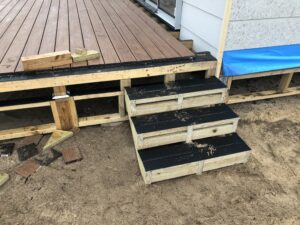 Stairs are a common site for accidents, so codes set exact dimensions for treads, risers, and handrails to ensure they’re safe and that each step is secure and predictable.
Stairs generally must meet these code requirements:
- Tread depth: Minimum 10″
- Riser height: Maximum 7.75″
- Handrail height: 34–38″
- Continuous handrail for 4 or more risers
Variations by Location
Codes can vary widely by state, county, or city, so never assume past rules will apply to your next project. Frost lines may be deeper in colder climates, railing heights higher in some municipalities, or footing sizes larger in high-wind zones. Always check your local codes before starting construction to avoid costly changes or failed inspections later.
Tips Ensuring Code Compliance
Consult with your local building official before you begin your deck project. Bring a plan sketch or printout, ask about any local variations, and confirm the inspection schedule. If you hire a contractor, make sure they are licensed and have experience with deck projects in your area. Keep thorough records of your permits, inspection reports, and manufacturer’s installation guides to avoid delays and prove compliance if questions arise later.
Conclusion
Deck building codes are more than boxes to check. They serve as safeguards against the most common deck failures and issues. When you follow them, you’re building a structure that’s safe, durable, and legally compliant. Over the years, I’ve watched code-compliant decks stay solid season after season, while those that skipped steps or cut corners often needed premature repairs. Before you start building your deck, check your local rules, obtain the necessary permits, and ensure a proper foundation from the outset.
Source
International Code Council. (2024). International Residential Code (IRC).